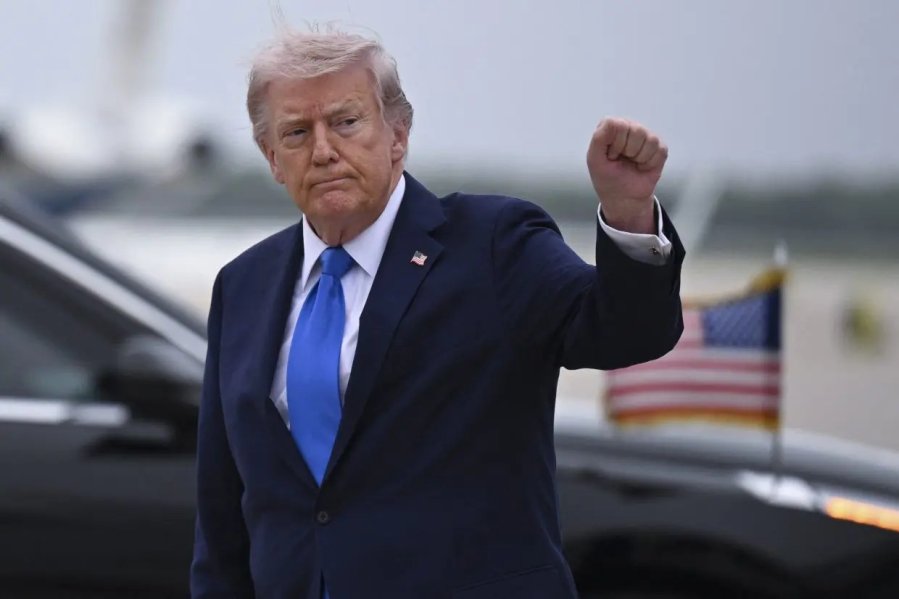

过去几周,在为中期选举造势的集会上,美国总统特朗普一再重申摧毁伊朗的威胁。那些轻信政府说辞、急于向美国民众灌输战争宣传的媒体,也不断转述这说法,声称美国能够迅速打击伊朗剩馀的目标,包括位于“镐山”的地下核设施,甚至只需“短短10分钟”。
媒体也提到,特朗普此前曾在中期选举前暂停大规模空袭,如今又大肆报导他已与高级军事指挥官商讨各种军事选项,并与以色列总理内塔尼亚胡讨论选后可能采取的行动,借此为特朗普针对伊朗所发表的各种说法增添可信度。
然而,这场试图挽回某种胜利的公开表演,与外界眼中是美国外交政策的一场重大挫败,背后的真实情况却有所不同。在幕后,特朗普及其美国谈判代表正竭尽所能,试图与伊朗达成和平协议,并将之包装成美国的胜利。
最明确的证据,是美国副总统万斯于2026年10月28日,透过卡达调解人,亲自致函伊朗最高国家安全委员会秘书莫桑雷札伊,探讨和平谈判的潜在框架。
这项接触正值特朗普警告美国在波斯湾的盟友,必须做好准备,因为美国可能在中期选举后展开一场短暂但高强度的军事行动。特朗普此前曾表示,美国可能“再来一次小规模的史诗怒火行动”,即今年2月对伊朗展开的军事行动。
在前往俄亥俄州参加造势活动前,记者追问这封信函事件时,特朗普回答:
“他问我怎么看。我说,如果你想这么做,那也没问题。基本上,就是运送物资进去,帮助那些身体状况不佳的人。”
主动接触
万斯之所以选择致函莫桑雷札伊,而非伊朗外交部其他官员,声称目的是“运送物资进去,帮助那些身体状况不佳的人”,是因为华盛顿评估,伊朗的关键决策权力掌握在接近伊斯兰革命卫队的核心圈子手中。
-建议谈判框架:根据《卫报》及《华尔街日报》的报导,这封信提出一套谈判架构:伊朗须在7天内,就核计划及重新开放霍尔木兹海峡作出承诺,以换取美国放宽制裁。
-总统立场与说法落差:特朗普如今已公开承认,自己授权万斯与伊朗接触,但他刻意将这次接触描述为协助伊朗取得“医疗物资及各种用品”,淡化自己曾直接授权展开和平谈判的事实。
-伊朗的回应: 包括外交部长阿拉格齐及国会议长卡利巴夫在内的伊朗官员表示,他们已研究这封信函,也注意到华盛顿语气出现转变,但强调伊朗的核心条件并未改变,并拒绝美国“胡萝卜加大棒”的谈判方式。最高领袖穆杰塔巴同时警告,伊朗的报复行动将不受地理范围限制,这项警告将深刻影响双方最终能够达成的协议内容。
美国加紧寻求和平协议的原因
目前大多数分析美国持续介入伊朗冲突的评论,都忽略了一项关键因素:伊朗所拥有的防御与进攻武器库,以及一旦美国或以色列再次发动攻势,伊朗所能采取的反制手段。
伊朗的军事选项
●导弹与无人机攻击:伊朗持续向波斯湾、伊拉克及约旦境内美军基地发射导弹与无人机。针对民用发电厂、海上天然气平台、炼油厂及港口的袭击,也可能进一步升级。情报评估显示,伊朗的导弹库存已恢复至2025年6月以前的水平,弹道导弹数量多达3000枚。
●再次封锁霍尔木兹海峡:伊朗可利用水雷、快艇、反舰导弹及扣押船只等手段,再次封锁霍尔木兹海峡,并攻击美国军舰。
●联合区域武装力量:伊朗可获得胡塞武装的支持,封锁曼德海峡,同时联合伊拉克民兵组织及黎巴嫩真主党采取行动。
●打击驻有美军的国家:伊朗可能攻击境内设有美军基地的国家。在7月30日美国发动空袭后,伊朗曾袭击科威特、约旦及埃及的目标。
●攻击波斯湾能源枢纽:伊朗可袭击卡塔尔的拉斯拉凡液化天然气设施、阿联酋的富查伊拉港及沙地阿拉伯的石油加工设施,推高国际油价,借此向华盛顿施压。
伊朗的非军事选项
●网络攻击:伊朗可能对供水控制系统、电网、通讯系统、银行及美国公用事业设施发动网络攻击。
●核武相关行动:伊朗可能退出《核不扩散条约》、驱逐国际原子能总署核查人员,或利用秘密离心机设施,将现有核材料浓缩至武器级水平。
●其他战略行动:包括干扰全球定位系统(GPS)、在中期选举结束后展开更有影响力行动,以及进一步拉拢俄罗斯与中国。其中,伊朗很可能与俄罗斯、中国等大国签署战略、军事及经济合作协议,从而完全绕过西方制裁。
伊朗会否攻击以色列及波斯湾国家的基础设施?
伊朗已明确表明这种可能性。伊朗军方指挥部警告,一旦伊朗的燃料及能源基础设施遭到攻击,区内所有美国及以色列的能源、资讯科技与海水淡化设施,都将成为打击目标。
伊朗也在其他地方付诸行动。一架无人机曾击中巴林穆哈拉格(Muharraq)附近的一座海水淡化厂。此外,伊朗也曾将以色列的电力供应设施列为攻击目标:一枚弹道导弹落在哈代拉(Hadera)附近,据信原本瞄准的是以色列最大的发电厂。
在政权生存受到威胁的情况下,伊朗也曾警告,若美国或以色列恢复对伊朗的军事打击,德黑兰已制定详细计划,准备攻击霍尔木兹海峡及波斯湾内多达7条主要海底通讯电缆。
伊朗若对以色列及波斯湾地区的基础设施发动实质军事攻击,势必立即推高全球能源价格,造成区域供应链大范围中断,并使冲突升级为一场更大规模的区域战争。
美国与以色列,包括波斯湾国家在内,都无法幸免于美伊战争重燃所带来的负面冲击。美国及以色列最新的民意调查结果显示,两国民众都无意愿承受一场旷日持久的冲突。
林德宜《伊朗和平协议:特朗普终将退步》原文:Iran Peace Settlement: Trump Bends His Knees
The last few weeks at his midterm electioneering rallies have seen President Donald Trump repeating his threat to destroy Iran. A gullible mass media eager to feed Americans with war propaganda has repeated his claim that the U.S. could swiftly strike remaining targets in Iran—including the underground nuclear complex at Pickaxe Mountain—”in as little as 10 minutes”.
They have also noted that Trump previously paused major strikes ahead of the midterm elections and continue to trumpet the news that he has weighed options with top military commanders and discussed post-election actions with Israeli Prime Minister Benjamin Netanyahu to give credence to whatever claims Trump makes on Iran.
The reality behind this public attempt to salvage some sort of victory from what the world see as a US foreign policy debacle is different. Behind the scene, Trump and his American negotiators are trying hard to arrive at a peace settlement with Iran that they can proclaim as an American success.
The clearest evidence of this is Vice President J.D. Vance’s personal letter to Iran’s Supreme National Security Council Secretary, Mohsen Rezaei, via Qatari mediators on 28 October 2026 to explore a potential framework for peace talks.
The outreach comes as Trump warned the US’s Gulf allies to prepare themselves for a brief, high-intensity military campaign after US midterm elections. Trump previously said the US may “do another little Epic Fury”, referring to the military operation that began in February.
When pressed on this unprecedented letter ahead of traveling to a rally in Ohio, Mr Trump replied,
“He asked me what I thought. I said, if you want to do that, that's okay. Basically, it's getting supplies in to help people that are not well”.
The Outreach
Vance sent the letter to “get supplies in to help people that are not well" to Mohsen Rezaei rather than other foreign ministry figures because Washington assessed that crucial decision-making power rests close to the Islamic Revolutionary Guard Corps (IRGC).
• Proposed Framework: According to reports by The Guardian and The Wall Street Journal, the letter proposes a structure where Iran makes commitments regarding its nuclear program and the opening of the Strait of Hormuz within seven days in exchange for U.S. sanctions relief.
• Presidential Stance and Discrepancy: Trump has now publicly acknowledged authorizing Vance to make contact, though he characterized the outreach narrowly as an effort to assist Iran with "medical supplies and various things," while downplaying direct peace-talk authorization.
• Iran’s Response: Iranian officials—including Foreign Minister Abbas Araghchi and Parliament Speaker Mohammad Bagher Ghalibaf—indicated they studied the letter and noted a shift in Washington's tone, but maintained that Iran’s core conditions remain unchanged and rejected a "carrot-and-stick" approach. Supreme Leader Mojtaba Khamenei's parallel warning of "geographically unrestricted" retaliation will heavily influence the type of settlement that can actually be reached.
Why US Effort To Arrive At A Peace Settlement Has Intensified
Most analyses of the current US position continuation of the Iran conflict fail to highlight the kinetic defence and offence arsenal that the country has at its disposal in response to any new US/Israel offensive.
Iran’s Military Option
●Missile and drone barrages on US bases across the Gulf, Iraq and Jordan have continued. Strikes on civilian power plants, offshore gas platforms, refineries and ports are likely to intensify. Intelligence estimates suggest the Iranian missile arsenal is back to pre-June 2025 levels, up to 3,000 ballistic missiles.
●Closing Hormuz again with mines, fast boats, anti-ship missiles and ship seizures, plus attacks on US warships.
●Backed by Houthis who have closed Bab el-Mandeb, alongside Iraqi militias and Hezbollah.
●Hitting countries that host US forces. After the July 30 US strikes, Iran struck targets in Kuwait, Jordan and Egypt.
●Strikes on Gulf energy hubs (Ras Laffan LNG, Fujairah, Saudi processing sites), to push oil prices up and pressure Washington.
Iran’s Non-military Options
●Possible cyberattacks on water control systems, power grids, communications, banks and US utilities.
●Nuclear moves: leaving the Nuclear Non-Proliferation Treaty, expelling International Atomic Energy Agency inspectors, or enriching stockpiles to weapons-grade levels utilizing covert cascade sites.
●GPS jamming, post election-season influence operations, and drawing Russia and China in further. There is a likelihood of strategic, military, and economic alignment treaties with external great powers like Russia and China to bypass Western sanctions entirely.
Would Iran target Israel and Gulf States infrastructure?
Iran has said so outright. Iran's military command warned that if its fuel and energy infrastructure is hit, all US and Israeli energy, IT and desalination infrastructure in the region will be targeted. It has followed through elsewhere: a drone hit a desalination plant near Muharraq in Bahrain. It has also aimed at Israel's power supply: a ballistic missile fell near Hadera, apparently aimed at Israel's largest power plant. :
In a regime-survival scenario, Iran has also warned that Tehran has detailed plans to target up to seven major undersea communication cables in the Strait of Hormuz and Persian Gulf if the United States or Israel resume military strikes against Iran.
Kinetic military action by Iran against Israel and Gulf infrastructure would likely trigger an immediate spike in global energy prices, widespread regional supply chain disruptions, and turn an escalation into a broader regional war.
Both the US and Israel, besides the Gulf States, will not be spared the negative impacts of a renewal in the US-Iran war. The latest US and Israel poll results show that both American and Israeli public have no stomach for a prolonged conflict.
本文观点,不代表《东方日报》立场。
要看最快最熱資訊,請來Follow我們 《東方日報》WhatsApp Channel.